 Central Japan
About Cancer Treatment

Surgery, Radiation Therapy and Chemotherapy (cancer drugs) are considered 3 pillars of cancer treatment. There’s no ‘one size fits all’ treatment approach for cancer. Many cancer treatments exist. The evidence-based guidelines suggest that you may receive one treatment or you may receive a combination of treatments depending on your particular situation.
How does Proton Therapy Work
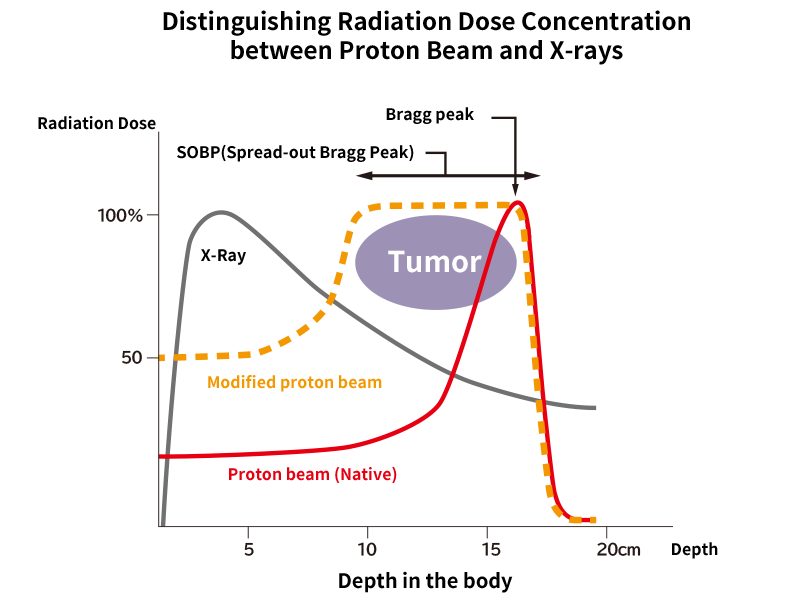
Under the umbrella of radiation therapy, there are several different sub-types. Proton therapy is one of those sub-types. Protons are separated from hydrogen atoms and sped up in a particle accelerator. The highly energetic, ionized proton is then ejected directly towards the tumor. In traditional radiation therapy, X-ray or gamma ray particles (photons) are ejected. On the other hand, the unique physical properties of proton therapy is capable of "Once the proton beam reaches the tumor, it conforms to its shape and depth, and only then releases its full energy right at the point of the tumor as it reaches its intended destinations". With pencil beam scanning technology, we know exactly how to control the beam position, shape and depth, with unmatched precise deposition of radiation in all three dimensions of tumor.
How is Proton Therapy Different from Traditional Radiation Therapy
While traditional radiation therapy affects everything in its path, the unique physical properties of proton therapy allow protons to release and deposit maximum radiation dose right at the point of the tumor then stops. The advantages of proton therapy are their ability to precisely target complex shaped tumors while minimizing radiation exposure to healthy tissues and organs.
Traditional Radiation Therapy
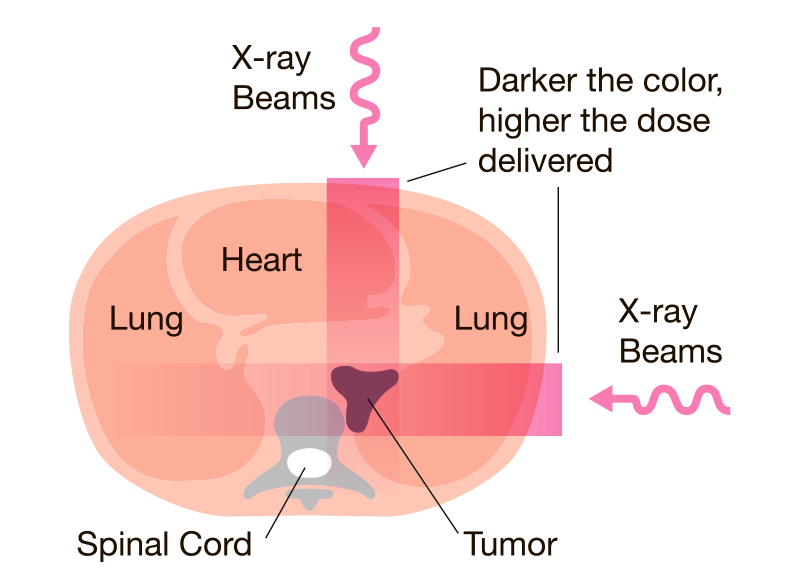
Deposits energy along their paths before and after it reaches the tumor, thus delivering radiation to surrounding healthy tissues and organs.
Proton (Particle Beam) Therapy
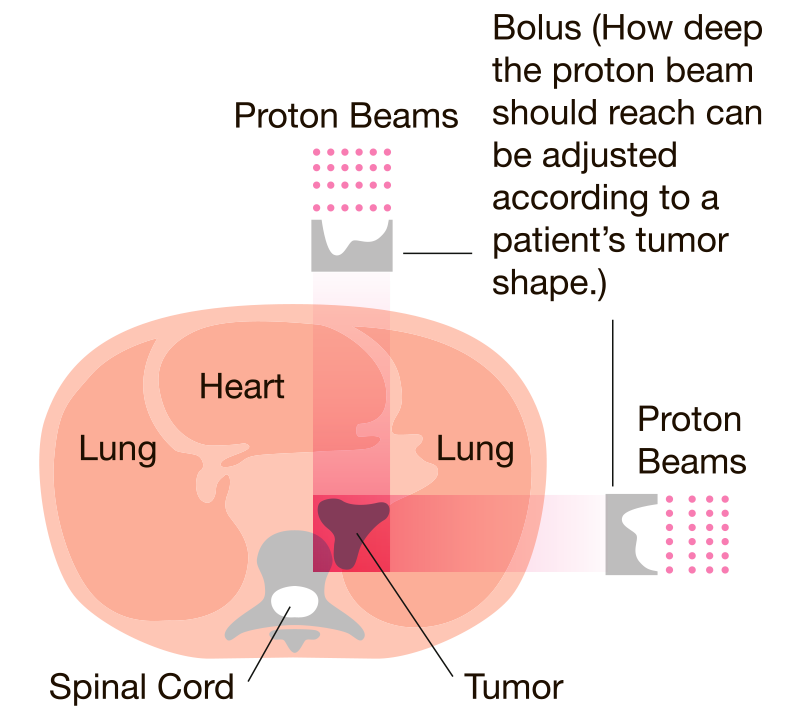
Capable of delivering radiation where it needs to go and stops, avoiding damage to nearby organs and healthy tissues.
Proton Therapy at our Facility
(Intensity Modulated Proton Therapy)
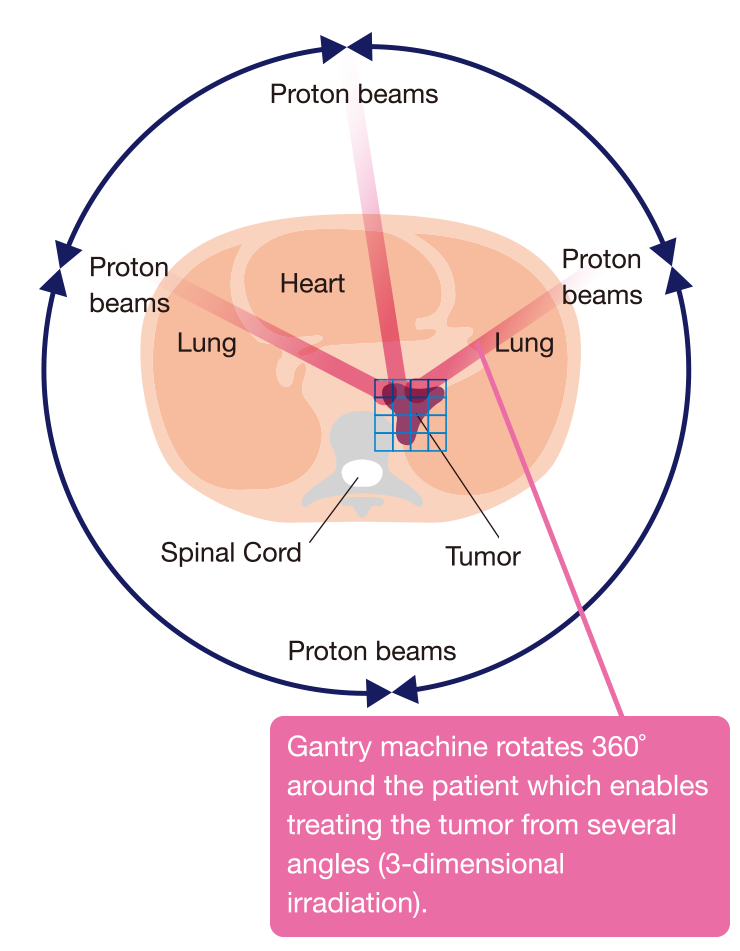
Our proton therapy center is equipped with the ProBeam® 360° proton therapy system manufactured by Varian Medical Systems, Inc. (USA). This system enables three-dimensional irradiation, allowing treatment of tumors from 360 degrees. Using Intensity-Modulated Proton Therapy (IMPT) with pencil beam scanning technology, the proton beam can be precisely tuned to the desired range and intensity to achieve an optimal dose distribution in both position and depth. The freely movable treatment couch further enhances the accuracy and efficiency of radiation delivery.
Manufactured by US based Varian Medical Systems Inc.
ProBeam360°
Intensity-Modulated Proton Therapy (IMPT) with pencil beam scanning technology
Only 4 millimeters wide, pencil beam scanning can be customized to target a patient’s unique tumor size and shape.
Providing state-of-the-art multidisciplinary care
Cancer treatment can involve various approaches, including surgery, drug therapy, and radiation therapy. In recent years, as these treatments have become more specialized and segmented, there has been growing attention on “multidisciplinary treatment,” which combines multiple approaches. Accumulated medical data have shown that combining treatments appropriately, based on each patient’s condition and stage of disease, can achieve better outcomes than using a single therapy alone. In multidisciplinary treatment, healthcare professionals from different fields work together as a team, carefully discussing and determining the optimal treatment plan for each patient.
In combination with intra-arterial chemotherapy for advanced head and neck cancer
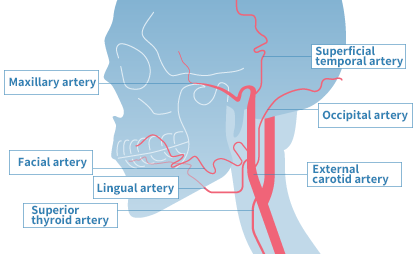
Intra-arterial infusion therapy involves inserting a catheter into an artery to deliver chemotherapy drugs directly to the tumor. By administering a high concentration of the drug to the tumor site while minimizing systemic exposure, this treatment enhances efficacy and reduces side effects. Our hospital is the only facility west of the Kanto region capable of combining this therapy with proton beam therapy.Particularly for head and neck cancers, this approach has gained attention as a “non-surgical treatment.” Compared to standard surgery, which often requires extensive removal of the tongue, it allows treatment while preserving function, greatly contributing to the improvement of patients’ quality of life.
Normally, a catheter is inserted through the femoral artery in the thigh, but our hospital uses a unique system called ECAS, developed by our Director, Dr. Fuwa. This treatment, covered by Japanese health insurance, enables more precise drug delivery by injecting chemotherapy agents directly through arteries near the face.
Furthermore, we developed ReMAP, the world’s first small subcutaneously implanted port, which reduces the risk of bleeding and infection. Compared to the ECAS method that requires hospitalization, ReMAP allows treatment on an outpatient basis, significantly reducing the strain on patients.
Learn more about intra-arterial chemotherapy >
In combination with hyperthermia and hyperbaric oxygen therapy
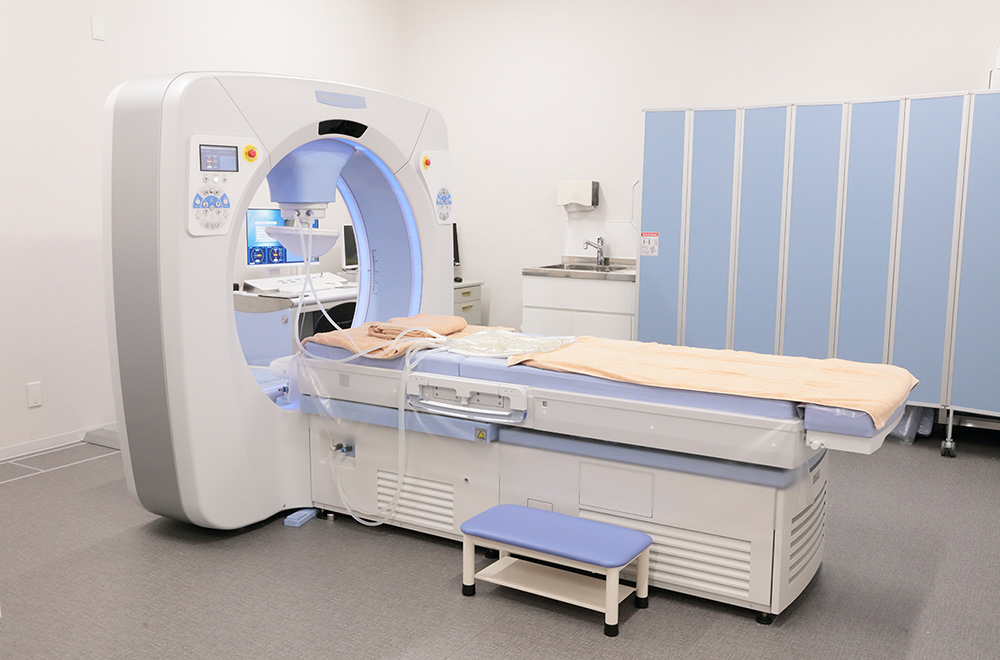
Hyperthermia therapy (also called hyperthermia) involves heating the tumor using electromagnetic or radiofrequency energy. Cancer cells are more likely to die when their temperature exceeds approximately 42.5°C, while normal cells can regulate heat through increased blood flow. Tumor cells, however, have fragile blood vessels and cannot dissipate heat effectively. This difference in temperature helps selectively destroy cancer cells. Generally, heating tumors to 43°C or higher for 1–2 hours can induce cell death. Even at 39–42°C, increased blood flow can enhance the delivery of chemotherapy drugs into the tumor, potentially improving the effectiveness of chemotherapy.
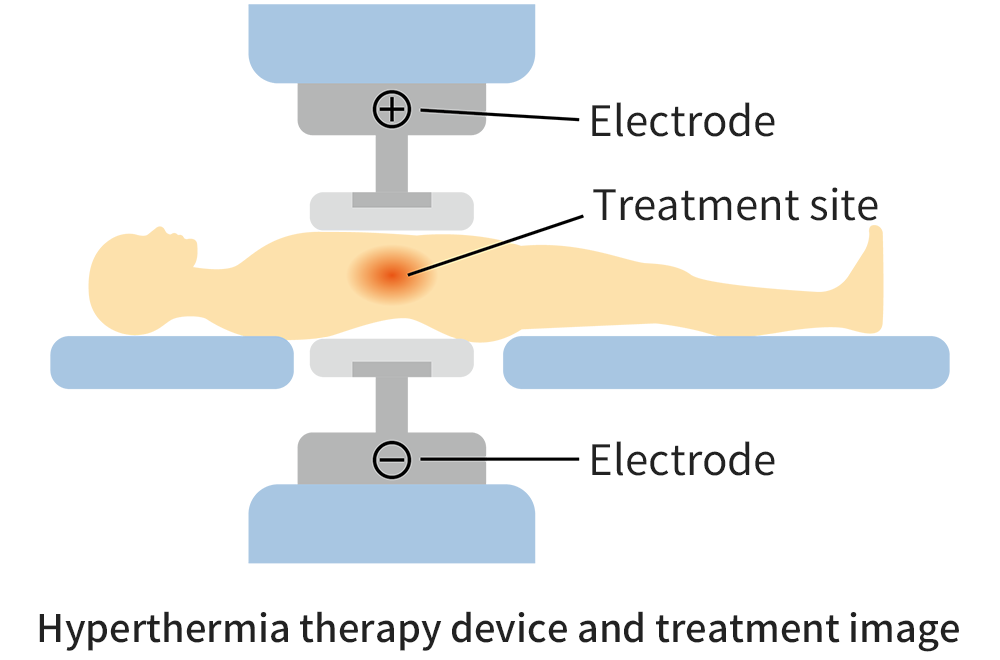
Recently, there has been growing interest in combining hyperthermia therapy with proton therapy or chemotherapy to enhance treatment effectiveness. Unlike alternative therapies, hyperthermia has a long history and is supported by solid medical evidence. In the case of hard-to-treat cancers such as pancreatic cancer, studies have reported improved survival rates when hyperthermia is combined with chemotherapy or radiation therapy. The combination of hyperthermia and radiation therapy is particularly effective for large tumors—such as advanced breast cancer or sarcomas—because as tumors grow, blood flow can stagnate, reducing natural cooling and allowing temperatures to rise more easily. Since proton therapy for sarcomas is covered by health insurance, combining it with hyperthermia is expected to provide significant therapeutic benefits.
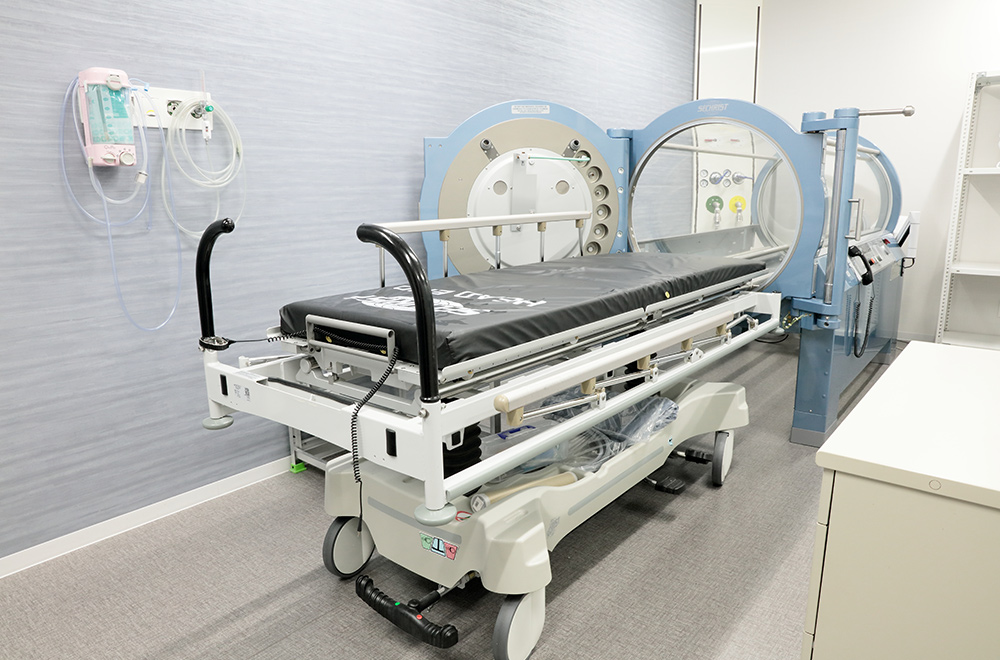
Hyperbaric oxygen therapy involves breathing 100% oxygen in a chamber pressurized to 2–2.5 atmospheres. This increases the oxygen content in the blood, promoting the regeneration of damaged tissues and reducing inflammation. While it is commonly used for conditions such as decompression sickness, peripheral circulatory disorders, and infections, it has also been shown to be effective in cancer treatment.
All tumors exist in a hypoxic (low-oxygen) environment, and when conditions worsen, cancer cells can become more active. For example, in pancreatic cancer, the oxygen concentration within tumor cells is often below a few percent, compared with normal pancreatic tissue. Under such hypoxic conditions, cancer cells can activate factors that promote blood vessel formation or facilitate metastasis. Hyperbaric oxygen therapy can help restore the internal environment of cancer cells, which may contribute to preventing recurrence.
Additionally, higher oxygen levels enhance the effectiveness of radiation therapy, so combining hyperbaric oxygen therapy with radiation can further improve treatment outcomes. Similarly, in chemotherapy, oxygenating cancer cells may increase the efficacy of the drugs.
Hyperbaric oxygen therapy is also effective in reducing late complications following radiation therapy. It is used to promote healing in conditions such as radiation-induced proctitis and osteoradionecrosis of the jaw. This therapy not only enhances the effectiveness of cancer treatment but also helps minimize treatment-related complications.
Our hospital is one of the few facilities in Japan capable of combining four treatment modalities: chemotherapy, hyperthermia therapy, hyperbaric oxygen therapy, and proton therapy. In addition to pancreatic cancer, we combine hyperthermia and hyperbaric oxygen therapy for hard-to-treat cancers such as sarcomas, and we strive to provide each patient with the most appropriate, individualized treatment.